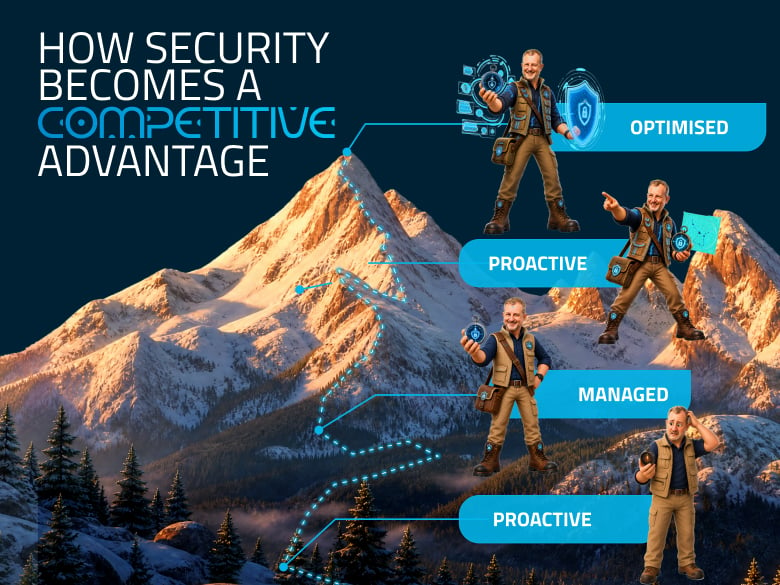

Today, strong cyber security is achievable without internal security staff. Across Australia, SMBs are protecting their systems and data by partnering with trusted technology service providers who take responsibility for monitoring, risk reduction, and response – without adding operational burden.
As cyber threats become faster, quieter, and increasingly automated, the real question for business leaders has shifted. It’s no longer “Should we be doing more?”, it’s “Who should manage this for us?”.
Can small businesses be secure without an internal security team?
Yes. Small businesses can achieve strong cyber security without in-house security staff.
Most SMBs rely on managed security services to deliver continuous monitoring, threat detection, incident response, and governance on their behalf. This provides access to specialist expertise and 24/7 protection – without the cost, complexity, or risk of building and maintaining an internal security team.
Why Most SMBs Don’t Have In-House Security
For many organisations, the absence of an internal security team isn’t a weakness – it’s a practical business decision.
Cost is a major factor. Effective cyber security isn’t a single role. It requires ongoing monitoring, incident response, patching, reporting, and continuous improvement. Hiring and retaining the people needed to cover all of this is simply not feasible for most SMBs.
There’s also a well-documented skills shortage. Cyber security specialists are in high demand, and smaller organisations often struggle to compete with enterprise salaries. Asking general IT staff to “also manage security” increases pressure and introduces risk.
On top of that, modern cyber security has become significantly more complex. It now requires alignment to recognised frameworks, constant vigilance, and the ability to respond quickly to AI-driven threats. For many SMBs, outsourcing this responsibility is the safest and most sustainable option.
How SMBs Actually Stay Secure
Most SMBs don’t manage cyber security on their own. They use a structured, outsourced model designed to deliver protection without internal overhead.
At the centre of this approach are managed security services. These services provide specialist tools, expertise, and oversight, ensuring security controls are properly implemented, monitored, and continuously improved.
Many providers also operate a Security Operations Centre (SOC), where systems are monitored around the clock. This allows unusual activity to be detected and responded to quickly – something that’s difficult for most SMBs to achieve internally, but critical given how fast attacks can escalate.
To keep security practical and measurable, SMBs often align their protections to recognised frameworks such as the Essential Eight, which focuses on reducing the most common and damaging cyber risks.
What Gets Outsourced vs What Stays In-House
Outsourcing cyber security doesn’t mean handing over control. In fact, it usually brings clearer accountability.
Typically managed by a security partner:
- Continuous monitoring and threat detection
- Incident response and remediation
- Vulnerability management and patching
- Security tooling and configuration
- Alignment to frameworks such as the Essential Eight
Retained within the business:
- Ownership of risk and priorities
- Strategic decision-making and approvals
- Staff awareness and behaviour
- Executive-level oversight
This model works because responsibility stays with the business, while the technical workload is handled by specialists who focus on security every day.
Why This Model Often Works Better Than Internal Teams
For many SMBs, working with a dedicated technology partner delivers stronger outcomes than relying on a small internal team.
Security providers work across multiple industries and environments, giving them broader visibility into emerging threats and attack patterns. That shared experience allows risks to be identified earlier and managed more effectively.
This model also ensures consistency. Internal security efforts can be disrupted by staff turnover, leave, or competing priorities. Managed services provide continuous coverage, clear processes, and reliable support – including outside business hours.
Just as importantly, costs are predictable. Rather than funding multiple roles, tools, and ongoing training, SMBs access a complete security function at a known, scalable cost.
What to Look for in a Security Partner
For organisations without internal IT or security teams, choosing the right partner is critical.
A strong provider should communicate clearly, explain responsibilities in plain language, and provide regular reporting that supports confident decision-making. Security should never feel unclear or out of reach.
Framework alignment matters too. In Australia, providers should be experienced with standards like the Essential Eight and able to tailor controls to your actual risk profile – not apply a one-size-fits-all solution.
Most importantly, the relationship should feel like a partnership. The right partner understands the realities of running an SMB and focuses on reducing risk in a way that’s practical, sustainable, and aligned with your business goals.
Security Without the Internal Burden
Strong cyber security doesn’t require an internal security team – but it does require the right expertise behind you.
At Bekkers, we support SMBs with locally delivered, framework-aligned cyber security services designed for organisations without internal IT or security teams. We take responsibility for monitoring, response, and continuous improvement, helping you manage risk with confidence.
If you’d like to better understand your current risk posture or explore a more structured approach to cyber security, talk to Bekkers about a cyber security assessment or strategy discussion.